Categories
Uncategorized

The Future is Ours

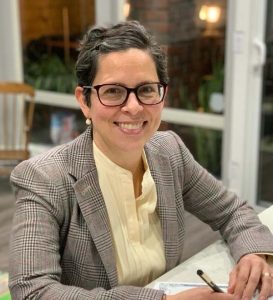
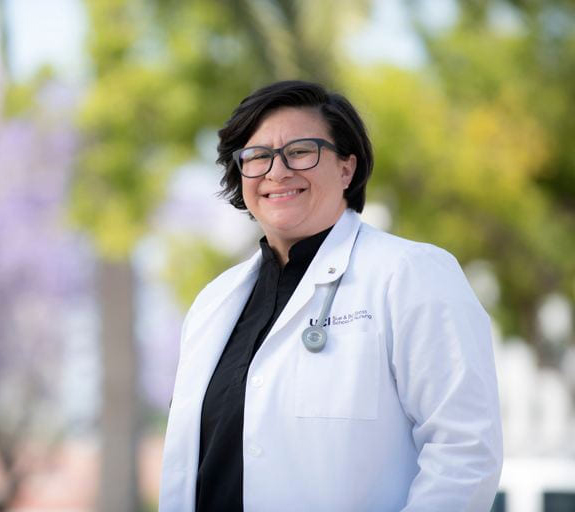
#IamUCI – Nikki Yamashiro

Q&A with Class of 2022 graduate Nikki Yamashiro, D.N.P.

by Laura Rico

Nikki Yamashiro’s passion for solving problems and helping others led her to pursue a career in nursing. Her path to UCI’s Doctor of Nursing Practice program started at Glendora’s Citrus College, where she trained to become a licensed vocational nurse, and Cal State Fullerton, where she earned a B.S. in nursing. Yamashiro’s clinical background includes work in home health, pediatrics and a men’s correctional facility. Still, she doubted her ability to gain admission into UCI’s highly competitive D.N.P. program and calls doing so “the biggest blessing of a lifetime.” Reaching the pinnacle of her profession led to self-reflection and a desire to be intentional about her goals: to diversify the nursing workforce and address racial health inequalities. Yamashiro recently partnered with longtime UCI supporter Dolores Grunigen to create an endowment for graduate nursing students who plan to work with underresourced populations. “I identify as a queer person, a mother and a person of Hispanic origin,” she says. “As a nurse, our job is to get underrepresented communities to trust us.” Her D.N.P. capstone project at UCI’s Student Health Center included increasing the availability of the HIV prevention drug PrEP and implementing a culturally competent sexual health history survey. Additionally, Yamashiro says, simple practices such as displaying a gay pride flag and asking patients their pronouns are small but important ways to better serve LGBTQ+ people.

What is your favorite memory at UCI?
My favorite memory at UCI would have to be building these lifelong friendships with my fellow clinicians. We have laughed together, cried together, experienced life and death together, have navigated a pandemic, and everything in between. One memory wouldn’t justify the family I have built during my journey here. Words can’t describe the gratitude I have for those who I am so lucky to be surrounded by and call not only my best friends but my colleagues.

What are your plans after graduation?
I’d like to sleep in with all my babies and take them somewhere with my wife to soak in all their joy, because it’s truly life-giving! I also want to study for boards ASAP. There is much work to be done!

Where do you see yourself in five years?
I see myself working to impact the LGBTQIA community and expanding my experiences into the classroom to prepare the next generation of nurse practitioners.

ACCEPTANCE

I wish I knew how deserving I was of this role, that being authentically me is my greatest strength. I am the person I always searched for within my nursing journey. I wish for other underrepresented minorities this same experience in their journeys as healthcare providers. There is so much power in truly accepting yourself. – Nikki Yamashiro

Who was your biggest influence at UCI?
My biggest influence would have to be my two biggest mentors: Catherine Mireles (my mom), who has supported, encouraged and celebrated me every step of the way. She has been such a stellar example of the woman I aspire to be and the women I intend to raise. I couldn’t ask for a more understanding, ambitious, hard-working example of everything I want to emulate within my career. Secondly, Dr. Jeff Vu [nurse practitioner and associate director of the UCI Health Gender Diversity Program]. I cannot put into words the miracles I have witnessed within his patient appointments. There is not a moment where I don’t see his passion, love and drive to be impactful in the LGBTQIA community. He is not just a stellar clinician but a true lifeline for his patients. He has elevated the goal of what it means to be a great nurse practitioner. He is everything an NP should aspire to be. No rotation felt like work because of how welcoming he is. His mentorship is something I will carry and practice forever. I hope he knows the gratitude I have for all the work he has put into me.

What do you know now that you wish you had known before coming to UCI?
I wish I knew how deserving I was of this role, that being authentically me is my greatest strength. I am the person I always searched for within my nursing journey. I wish for other underrepresented minorities this same experience in their journeys as healthcare providers. There is so much power in truly accepting yourself.

What are your hobbies or interests?
My hobbies are my three children (Olivia, 6, and Emile and Elliette, 2). They are my greatest teachers and motivate me to be the best version of myself on a daily basis. I love cooking, and I’m a Rubik’s Cube fanatic. After NP boards, I plan on learning how to convert a VW bus engine into a fully electric motor.

Categories
Uncategorized

Q&A With 2022 UCI Grad Slam Winner Rachel Sousa

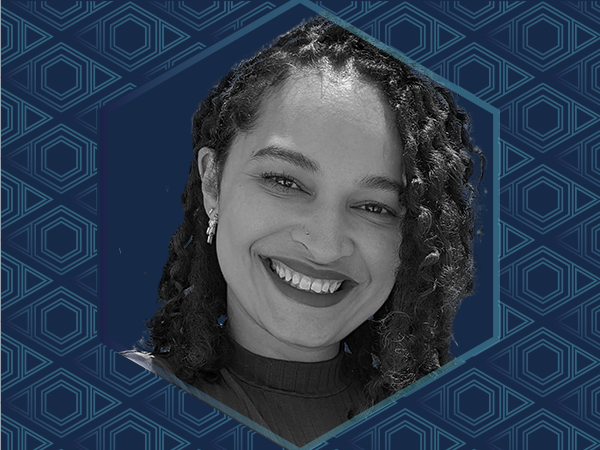
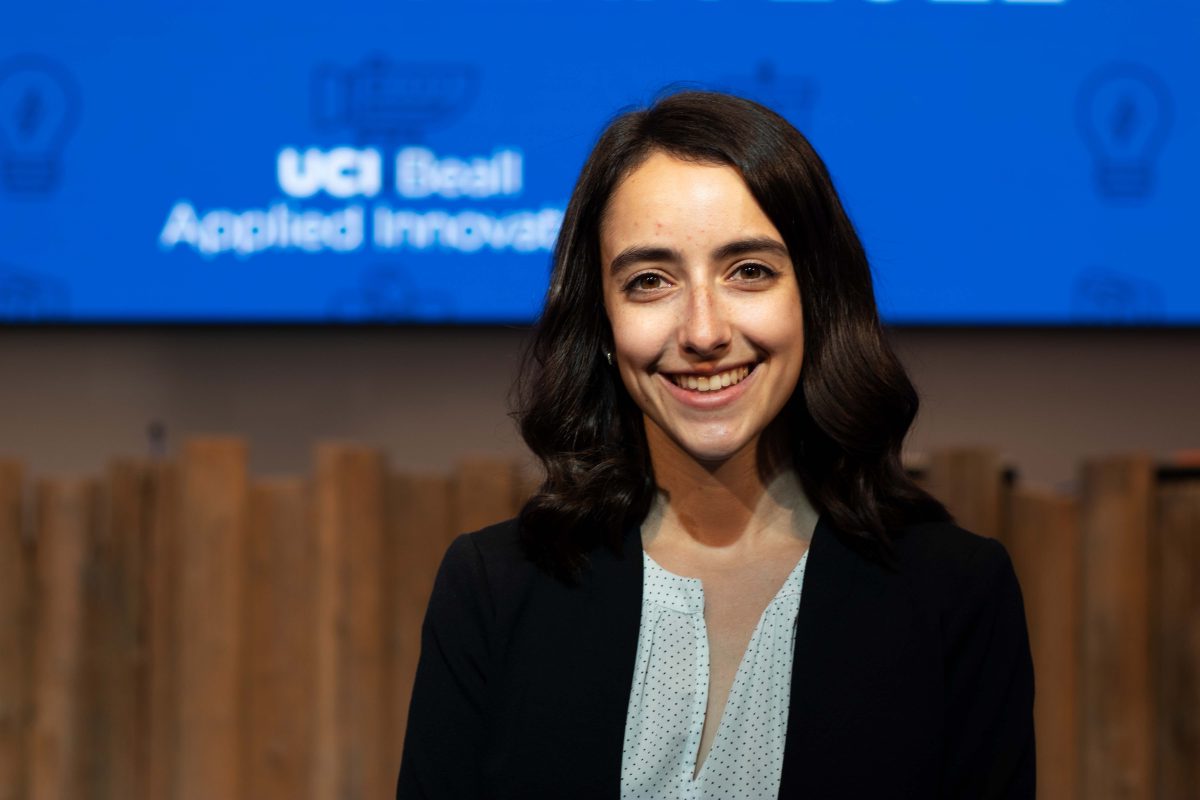
Rachel Sousa headshot

Q&A With Rachel Sousa

Curing Cancer With Math

UCI is a special place where innovative research takes place every day. It is a place where leaders are shaped for the future and life-changing discoveries are made. Whether it’s research to find a cure for cancer or an effort to finally support long term life on Mars, big things are happening at UCI. Rachel Sousa won the 2022 UCI Grad Slam Competition and will compete in the UC system-wide competition on May 6.

Can you tell us a bit about your research?
In my research, I use math to explore the interactions between the immune system and cancer. I am building a mathematical model of the cancer-immune system to identify the key differences that distinguish the ability of the immune system to eliminate cancer from those features that allow cancer to evade the immune system and persist in the body. With my model, I will be able to make predictions about the best combinations and schedules of immunotherapies (drugs that stimulate a person’s own immune system) that we should use to fight cancer. 

What got you interested in doing the work you do?
I have always loved math but didn’t know that it could be applied to a field like biology. During my first year of college, an older math student discussed how he used math to study riverbed systems during an internship. That conversation led me to discover the field of mathematical biology and I started conducting my undergraduate research soon after. Then I had an internship one summer with the National Cancer Institute where I constructed mathematical models of cancer cell growth and drug resistance. It was through that internship that I gained a deep interest in using math to study disease and where I decided that I wanted to go to grad school!

appreciate math

With my model, I will be able to make predictions about the best combinations and schedules of immunotherapies (drugs that stimulate a person’s own immune system) that we should use to fight cancer. – Rachel Sousa

You won this year’s UCI Grad Slam and are moving onto the systemwide finals: congrats! What has you most excited about being able to compete and represent UCI on May 6?
I am excited to represent UCI at the systemwide finals and have a platform to share how math can be applied to biology. I think that math is often an under-appreciated subject, so I am happy to shed some light on it and represent UCI while doing so. 

If you could give one tip to future UCI grad students looking to compete, what would it be?
I would definitely recommend competing in Grad Slam to other students. One tip I would give them is to practice all the time and to several different groups of people. You need to have your speech thoroughly memorized and practicing in front of various groups of people (say your family, friends, people in your cohort, your PIs, etc) helps you to get different perspectives on not only the content of the speech but the delivery of it too!

Categories
Uncategorized

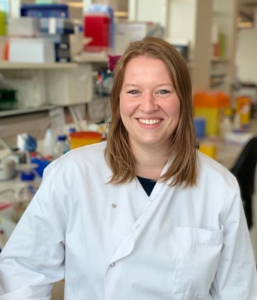
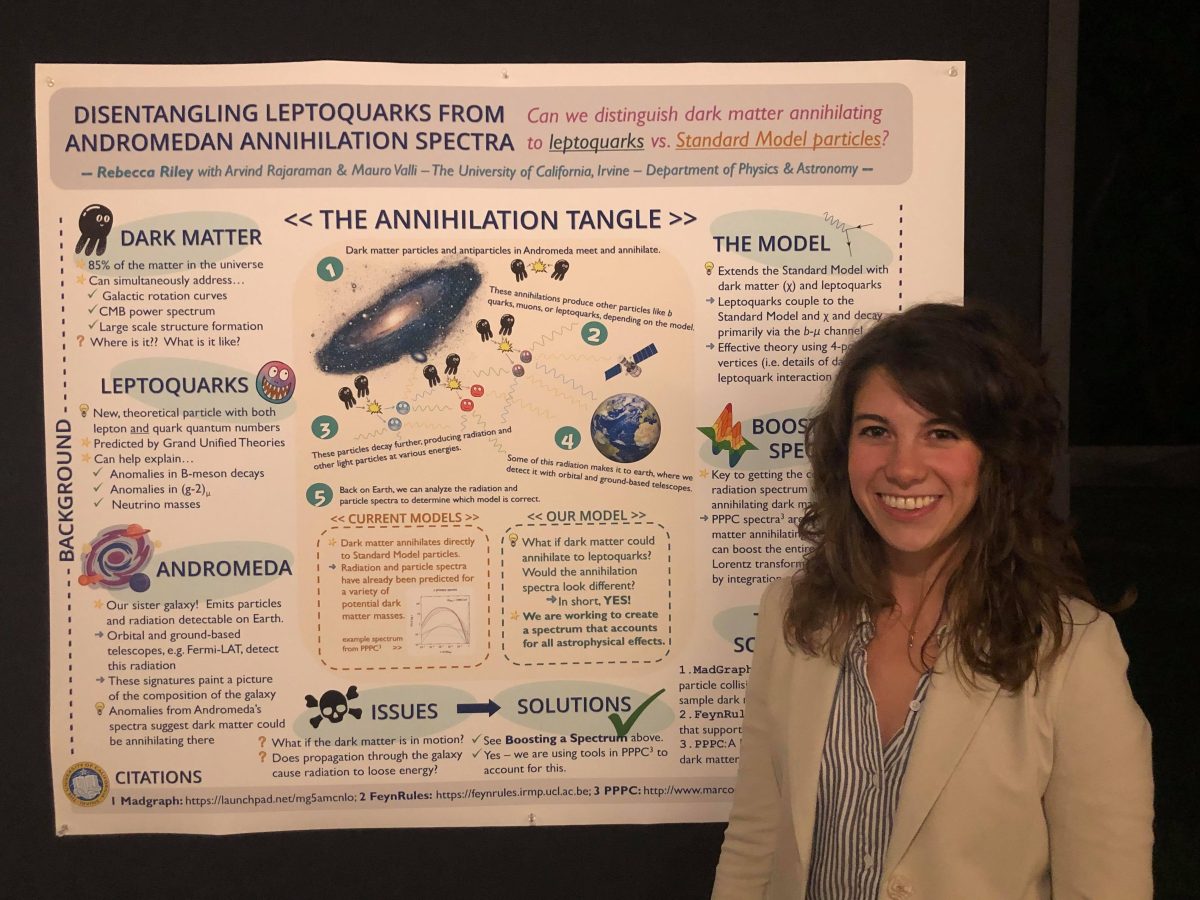
Q&A With Rebecca Riley

Q&A With Rebecca Riley

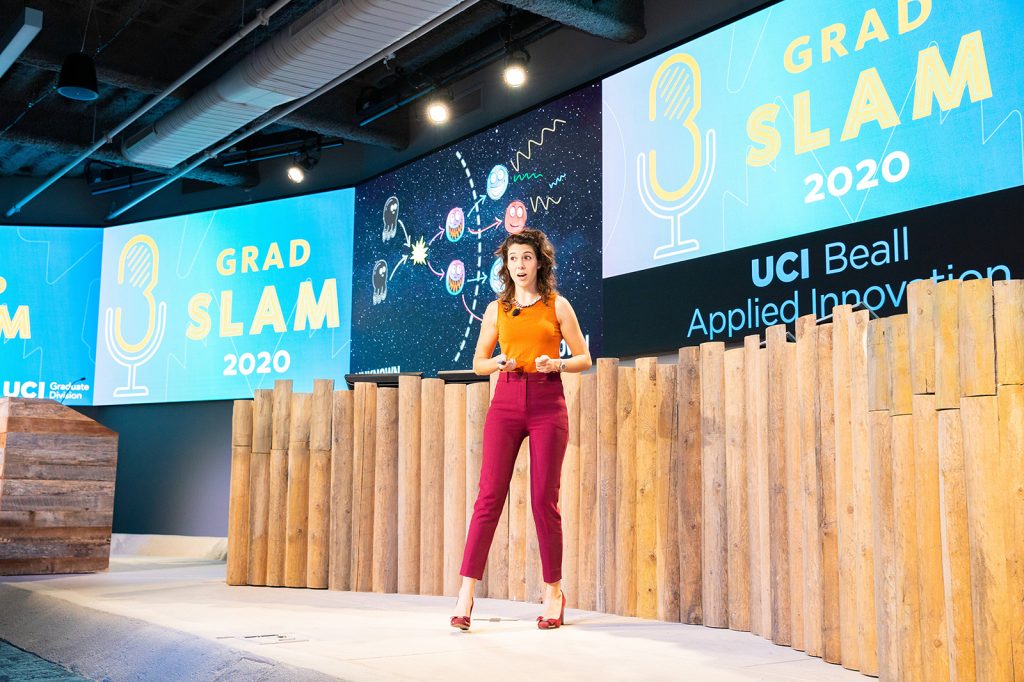
Rebecca Riley Flourishing After Grad Slam 2020 Win

UCI is a special place where innovative research takes place every day. It is a place where leaders are shaped for the future and life-changing discoveries are made. Whether it’s research to find a cure for cancer or an effort to finally support long term life on Mars, big things are happening at UCI. Rebecca Riley was the UCI Grad Slam 2020 winner and successfully defended her PhD in the summer of 2021.

You just successfully defended your PhD: congratulations! How has the PhD experience changed you?
Thank you! I like to think it hasn’t changed me too much. To earn a PhD, you have to become totally engrossed in the minutiae of your field, and it can be easy to lose sight of where you fit into the process of scientific discovery. I tried to make sure that didn’t happen. I still love particle physics and am in awe of the mysteries it reveals about our Universe. I’m less reverent towards the giants of physics now, though.

You won UCI Grad Slam 2020 – congratulations! How has the experience helped you in your real life?
Very personally, actually. My Grad Slam pitch allowed my family and friends to connect with and understand what I do — I didn’t expect that. Before Grad Slam, most of the people in my life thought my work was completely beyond their comprehension. Now they ask, “Tell me about that funky particle you study. It’s so cool!”

If you had advice or tips to give this year’s Grad Slam finalists, what would you say?
Do you remember the “wow” moment that sparked your journey to grad school? Aim to tap into the wonder and fascination that first made you fall in love with your field and telegraph that to your audience. That’s where the magic of a great pitch happens.

You can register to watch the UCI Grad Slam 2022 Finals here!

Categories
Uncategorized

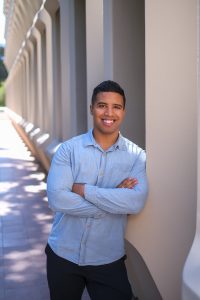
Q&A With Vivian U

Q&A With Vivian U

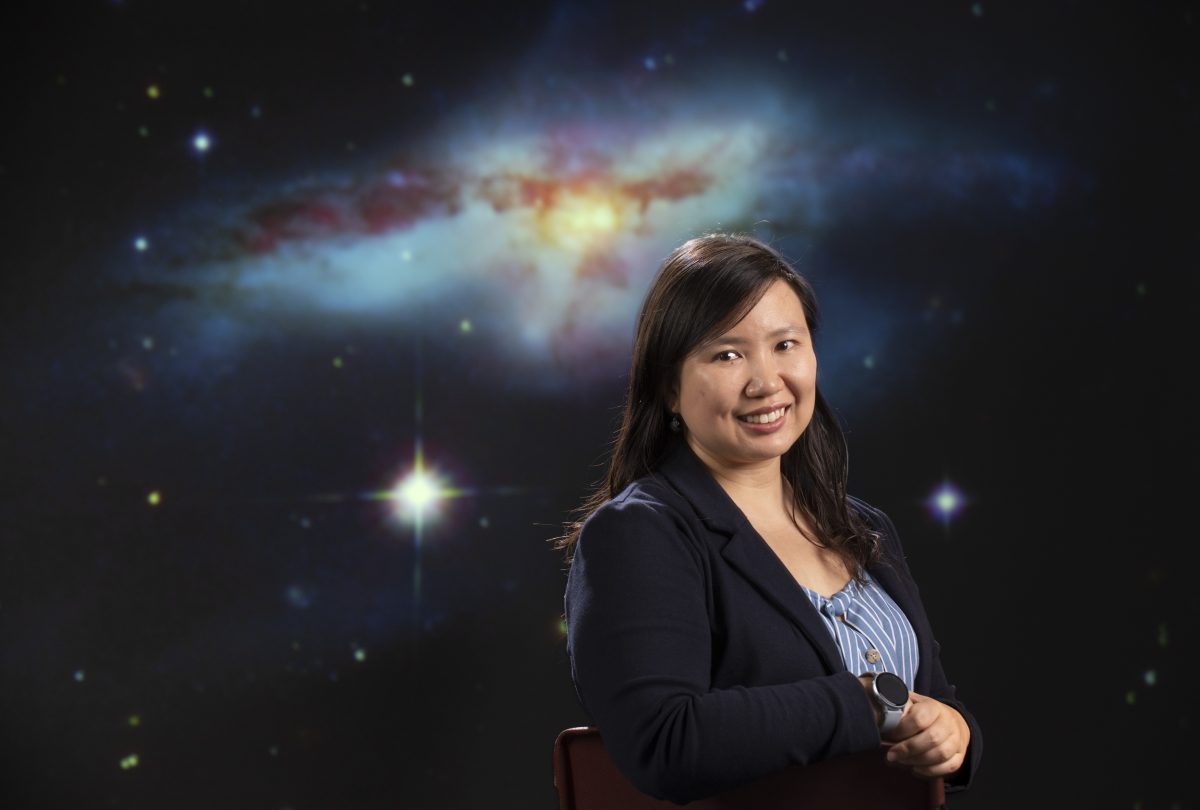
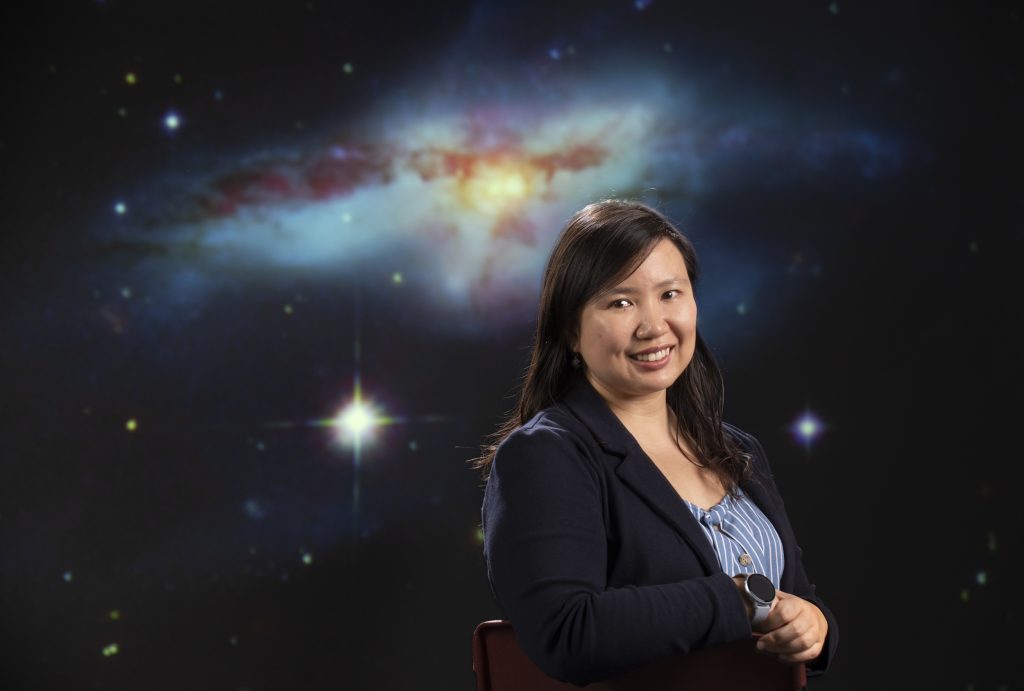
Galaxies and Supermassive Black Holes, Everyday Life for Vivian U

UCI is a special place where innovative research takes place every day. It is a place where leaders are shaped for the future and life-changing discoveries are made. Whether it’s research to find a cure for cancer or an effort to finally support long term life on Mars, big things are happening at UCI. Vivian U was a postdoctoral scholar at UCI and is now an assistant research astronomer.

You’re an astronomer. Why did you choose that field?
I chose to be an astronomer primarily because of the lure that space presents. I’ve always been fascinated by the night sky, and was inspired by how physics and chemistry explain the way the world works around us. When I participated in astronomy research for the first time during undergrad — stumbling over coding but marveling at images taken with the Keck Telescope, I knew that was what I wanted to do for the rest of my career. The prospect of advancing human knowledge about how the universe came about coupled with the appreciation of physical laws at work at all scales have drawn me to this field.

In addition, I have also enjoyed taking the road less traveled. I’ve always been up for challenges and something different, and being an astronomer was a far-fetched career for me growing up. The night sky was not very accessible to city-dwellers in skyscraper-filled Hong Kong where I spent my childhood, and my family had associated observatories with meteorology rather than astronomy. After I developed my passion for astronomy from reading books, the rebel in me set off on this path less traveled (until I met like-minded peers in college) and has since fulfilled a sense of accomplishment learning about our universe and overcoming hurdles along the way.

What is your research on, and what questions is it trying to answer?
My research focuses on understanding the co-evolution of galaxies and supermassive black holes. Specifically, how do galaxies contribute to the growth of their central supermassive black holes, and how do supermassive black holes, in turn, impact their host galaxies? I’m particularly interested in studying these feeding and feedback processes in galaxy mergers, where gas-rich spiral galaxies interact and merge with one another during an ephemeral but life-changing stage of a galaxy’s lifetime.

Endless Possibilities

The night sky was not very accessible to city-dwellers in skyscraper-filled Hong Kong where I spent my childhood … the rebel in me set off on this path less traveled.

– Vivian U

The James Webb Space Telescope (JWST) is a revolutionary space telescope that was placed nearly 1 million miles away from Earth. Can you tell us why scientists decided to place the JWST so far away? How do astronomers like yourself hope it’ll revolutionize our view of the Universe?

One main consideration for sending JWST to L2, or the second Lagrangian Point, is that as an infrared telescope, JWST has to be kept cool for optimal sensitivity so that it can detect faint infrared emission over low background noise. At L2, the Sun and the Earth are in the same direction where JWST’s sunshield can effectively keep the telescope and instruments cool for the duration of the mission. JWST is also sufficiently far away from the Earth’s thermal radiation.

Your proposal for time on the JWST was approved, congratulations! How will you be using the time you were awarded, and what do you hope to learn from the JWST for your specific research questions?

For my GO-1 proposal, I will be observing several nearby infrared-luminous galaxy mergers with the MIRI instrument aboard JWST. By observing the distribution and kinematics of several key mid-infrared diagnostic lines in targets we have previously identified to host molecular outflows, I hope to quantify the impact of AGN feedback on the interstellar medium via shock heating or other mechanisms, and determine how this may depend on intrinsic AGN properties whether the supermassive black hole is active or obscured.

If you have students at UCI working with you, what will they be doing, and what can they learn from the experience?

I am currently co-advising UCI graduate student Raymond Remigio on a project looking at ionized gas kinematics in nearby Seyfert galaxies. Raymond is learning how to analyze 3D data cubes taken with KCWI on Keck. The technique of analyzing integral-field data is very transferrable among new integral-field instruments coming online like those on JWST.

I will also be hiring postdocs to work on the JWST data this Fall, and would welcome any interested graduate student to get in touch if they would like to participate in our JWST research.

When you aren’t working, what do you like to do?

I like to spend quality time with my children; we enjoy going to the beach, biking, reading, or playing board games among different outdoor and indoor activities.

Any last words?

We as a community have been very pleased with the successful launch and deployment of JWST over the past month, and are looking forward to getting data starting this summer. But what I’m particularly grateful to learn is that the fuel will be sufficient for the mission to last for 20 years, much longer than the originally anticipated 5-10 year lifespan. This is really fantastic news because not only will JWST be able to provide valuable data for a long time, it will likely still be working while the extremely large telescopes become operational in the 2030s. The prospect of what synergistic science will be achieved with both JWST and the next-generation large ground-based telescopes is exhilarating.