

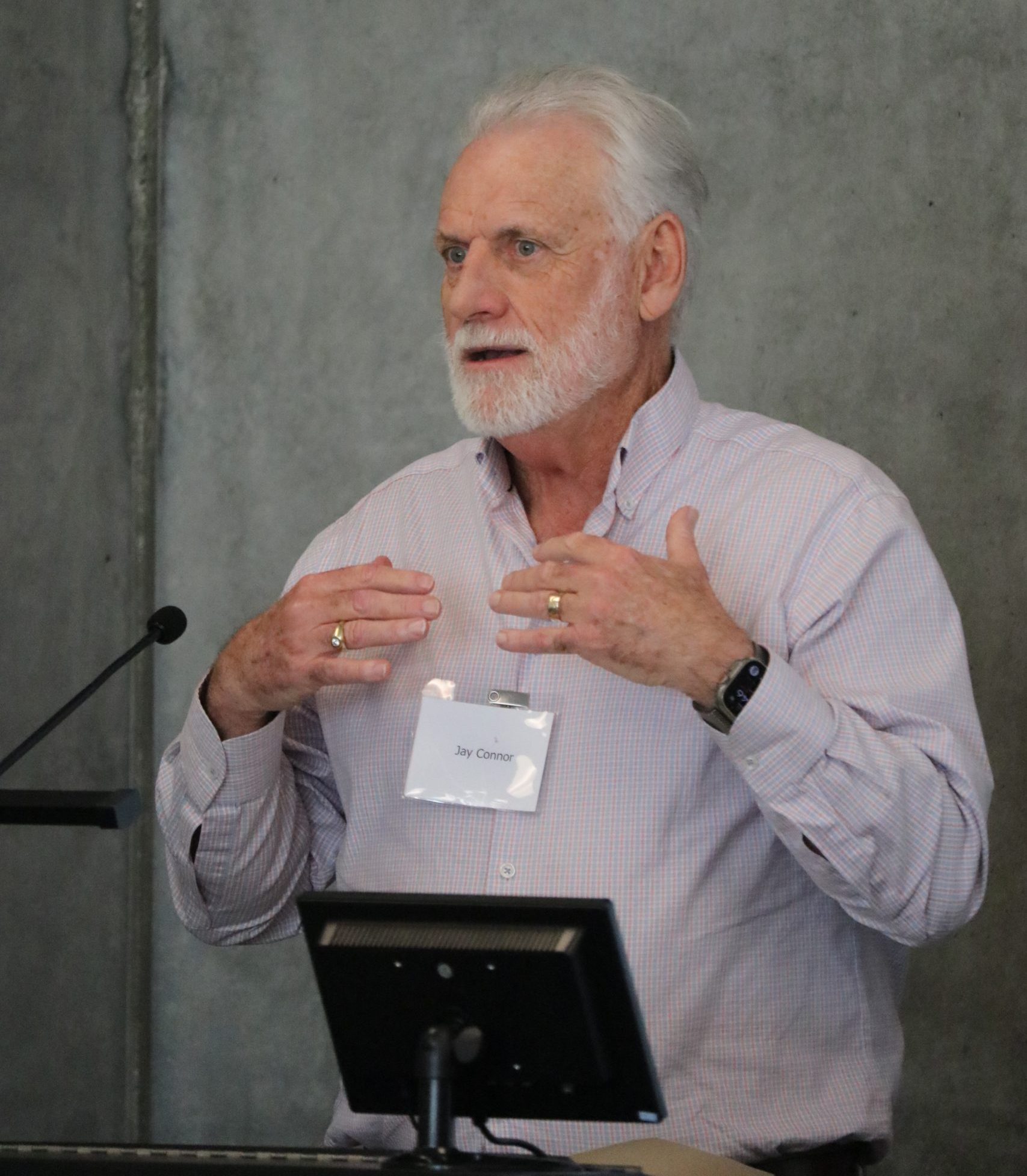
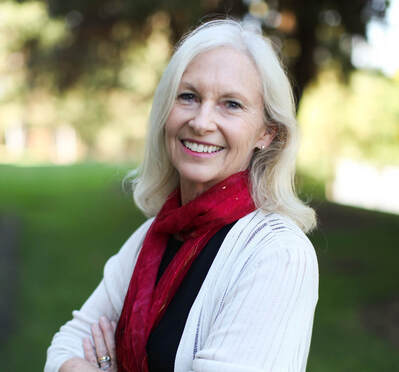
When Joseph A. “Jay” Connor and his wife, Carol McDonald Connor, first met in Chicago in the 1970s, they were two young professionals bonded by their aspiration for meaningful work and impact. Three children, two careers, and countless conversations later, they launched a shared effort to help every child in America learn to read by the end of third grade, eventually bringing the couple back to Southern California after Carol accepted the prestigious role of Chancellor’s Professor at UC Irvine’s School of Education in 2016. Using Carol’s rigorously tested and proven technology that enables teachers to individualize reading instruction, their company worked with schools to turn thousands of students across the nation into proficient readers. In 2022, after Carol’s untimely death from cancer, Jay sold the technology to Scholastic, which had the resources and reach to continue the Connors’ mission.
Dr. Connor’s legacy still lives on to this day through UCI’s Carol Connor Equity Advisor Impact Award. The award recognizes former and current equity advisors in pioneering, innovative and evidence-based peer mentoring and consultations to advance diversity, equity and inclusion at UCI.
UC Irvine Graduate Division caught up with Jay to talk about his journey, how he still honors Carol’s legacy, and much more. Jay and Carol’s inspirational journey together is also documented in his new book “Talking Together”, which can be purchased on Amazon.
This interview has been edited for length and clarity.
Q: Let’s start with your book. You and Carol have a special love for each other, and you built a beautiful family together. How did the academic side tie into all of that?
A: The title of Talking Together comes from Carol’s dissertation and reflects a central idea in our marriage: a true partnership empowers both people. Early on, our focus was supporting my corporate career. Later, when Carol pursued her PhD, I shifted so she could have the same freedom and support she had given me. In time, my corporate experience helped translate her academic research and resulting technology (called A2i) into real-world impact—something we didn’t plan, but that came full circle.
At the heart of it all was what I think of as a “through line”—a shared set of values that guided our decisions, especially when things were difficult. Talking together was our way of maintaining that through line, reminding ourselves that life isn’t just about what happens to you, but how you respond, guided by a clear sense of purpose and shared direction.
Q: Can you share a bit of your professional background?
A: I earned a joint JD/MBA from Northwestern on a full scholarship. I started in business school and quickly discovered my passion for business. I enjoyed building things, bringing people together, and achieving results. While law school proved valuable, I never intended to practice law and never took the bar, as business became my true focus.
My career began in marketing and evolved into creating tools that help people accomplish meaningful goals. That perspective carried through later, when Carol developed new educational technology. Her work created tools that enabled teachers to do things that had previously been very difficult, and it aligned perfectly with the same “through line” that had guided my career all along, which was using collaboration and practical tools to drive real results.
Q: For those who don’t know, can you please explain the basis behind Carol’s research?
A: Carol’s research grew out of a fundamental problem: we are doing a poor job helping children learn to read, a challenge seen not only in the U.S., but internationally. For decades, reading instruction has been framed as a false choice between two opposing methods—whole language or phonics—rather than focusing on what the individual child actually needs.
Carol’s path to literacy research began in the late 1990s through her work on cochlear implants at the University of Michigan. Her research showed that early access to sound was critical for language development, influencing policy to allow infants to receive implants. That work led her to focus on how language develops and, ultimately, how children learn to read.
Her research demonstrated that children learn differently. Some need more phonics, others thrive with independent reading. Carol’s technology allows teachers, even in large classrooms, to individualize instruction by grouping students effectively and matching them with the right materials from their existing curriculum. Without this shift toward individualized learning, reading outcomes have remained stagnant for decades, with more than a third of students still struggling to read.
Q: Is the biggest issue due to resources or is it not implementing the right technique? Or both?
A: Early on, the biggest barrier wasn’t resources or technique—it was the lack of agreement among researchers. That’s why Carol’s first major paper was Beyond the Reading Wars, calling for an end to ideological battles so real change could happen. For years, approaches became identities, and the focus shifted from outcomes to defending strategies.
The real shift comes when you stop asking what method you’re using and start asking what results you’re getting. Within existing classrooms and budgets, it’s possible to do better, but decades of failure created psychological inertia. Low expectations became the norm, and blame shifted to students and families rather than systems.
What was needed was a new approach and technology that made doing it right easier than doing it wrong. Carol’s technology to individualize instruction helped teachers succeed in teaching almost all their students how to read. Universities play a critical role here: they have the credibility to say that having a third of children unable to read is unacceptable and to reframe the conversation around accountability without blame. That changes the dialogue from excuses to shared responsibility and action.
Q: How did your family end up at UC Irvine?
A: It was a long, circuitous journey. We lived in Southern California when our kids were very young, and that early experience left a lasting imprint. Even after moving back to Michigan, our children all gravitated back to California for school and careers.
Over the next 20 years, we kept moving closer, from Ann Arbor (University of Michigan) to Florida State, then Arizona State—until we were recruited by both UCI and Stanford at the same time. UCI ultimately won out because of our deep affinity for Southern California and the opportunity to have all our kids nearby.
Q: What went into the decision to start the Carol Connor Equity Advisor Impact Award?
A: The award grew out of conversations with the Graduate Division, initially with former dean Dr. Gillian Hayes, as I was thinking about meaningful ways to honor Carol’s legacy. While my instinct was to focus on the School of Education, Gillian shared plans for an additional initiative, which became the Carol Connor Equity Advisor Impact Award. I was so impressed by the Graduate Division’s vision that I decided to endow it, even though it wasn’t a donor-driven request.
What made it especially meaningful was seeing the first award recipient reinvest the funds—exactly what Carol would have done. The award reflects a broader goal: connecting groundbreaking research, whether in education, health, or science, to real-world impact. UCI, and Orange County in particular, offer an ideal environment for this kind of applied innovation, which is why my focus remains on graduate education—where ideas are translated into tools, use cases, and lasting change.
Q: What are your next steps with Carol’s research?
A: In many ways, I’ve passed the baton. Through Learning Innovations, which was acquired by Scholastic, A2i (Assessment to Instruction) and its intellectual property are now in the hands of an organization capable of scaling it to thousands of school districts. That responsibility for implementation has moved forward.
My focus now is on recognition and learning—supporting the School of Education and the Graduate Division and using the book and this new grant to explore how research moves into real-world practice. The goal has shifted from measuring impact solely by how many children can read to sharing what we’ve learned about turning research into outcomes. That broader lens naturally extends from the School of Education to the entire university, where those lessons can inform impact across disciplines.