

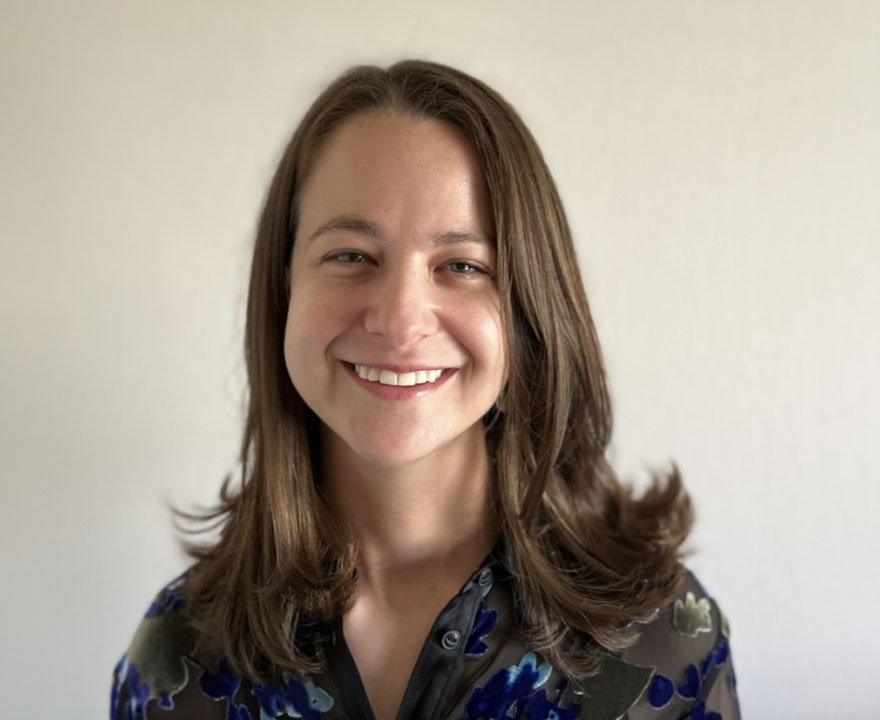
Christine Byrd for UC Irvine School of Social Sciences
While doing field work in Cambodia, Jen Zelnick, Ph.D. ’22 discovered her colleagues had been keeping a secret. The revelation would set her research on an entirely new path.
As a Luce Scholar, Zelnick spent a year in Southeast Asia working with a small public health organization exchanging needles and syringes to prevent the spread of HIV. She practiced her skills in the native Khmer language on a daily basis. Then, one day she walked into a meeting where, to her surprise, her Cambodian coworkers were conversing in perfect English.
“We’re all from California,” they explained. “But your boss said not to tell you.”
They were among a few hundred people who had been deported from the U.S. after living there for decades. Right away, Zelnick knew that this unique population would be the subject of her future dissertation – she just needed to get into graduate school first.
Pursuing that goal would take her to Chicago, Irvine and back to Cambodia to earn her Ph.D. before accepting a role at the State Bar of California where she could apply the lessons from those experiences to expand access to justice at home.
‘True collegiality’
Zelnick had been interested in anthropology since she was a high school student in New Jersey. While earning her bachelor’s in anthropology from Haverford College, she did undergraduate research in Indonesia and then completed the yearlong Luce Scholars program in Cambodia. When it came time to apply to graduate school, she was disappointed that no doctoral programs accepted her – but she eventually came to see that as a positive.
“UC Irvine hadn’t been on my radar when I first applied to grad school,” Zelnick says. But while earning her master’s at the University of Chicago in 2014, faculty including Justin Richland who is now professor and chair of the anthropology department at UC Irvine, pointed her to the sunny Southern California campus. Zelnick learned about UC Irvine anthropology professors including Susan Coutin, Eleana Kim and Leo Chavez, who study immigration from different angles – and all of whom eventually served on her dissertation committee. Zelnick realized that “UC Irvine just made sense when you looked at it.”
“For me, it was important to find professors who triangulated my project quite well,” she says. “I know I wouldn’t have gotten that elsewhere — because I looked.”
At UC Irvine, Zelnick received prestigious dissertation grants from the National Science Foundation, the Social Science Research Council, The Wenner-Gren Foundation, the Center for Khmer Studies, and the Center for Engaged Scholarship. At every step, she says she felt supported by her faculty advisors, especially Kim.
“Eleana really helped me understand how to write a grant and how to be responsive,” Zelnick says. “She helped me get my first peer reviewed journal article published and showed a lot of care for what I needed as a student and as a person.”
Zelnick also bonded with her cohort and was part of a trio of anthropology graduate students who visited each other during their fieldwork in Asia, and later served as bridesmaids in each other’s weddings.
“The cohort and the professors I worked with were incredibly supportive. I know from friends who went to grad school elsewhere that was not their experience,” Zelnick says. “True collegiality really, really, made the UC Irvine program worthwhile for me.”
Life after deportation
With funding for nearly two years of fieldwork, Zelnick explored whether people who committed a crime in the U.S. and were then deported to Cambodia, went on to build successful lives. Her research found that deported individuals are much more likely to be incarcerated and die prematurely – but those statistics are not destiny.
“There are people who really do find success after being convicted of a serious crime in the U.S. and serving their sentence, who become teachers, build families and become models in their communities.”
Working at a non-governmental organization that helped deportees acclimate upon arrival in Cambodia, Zelnick provided orientation to newcomers stepping off the plane from the U.S., and visited groups as they settled into the country to ensure their basic needs were being met.
One of her papers, published in the peer-reviewed Political and Legal Anthropology Review, examined the delicate bureaucratic dance between governments that was necessary to create Cambodian citizenship for the individuals being deported from the U.S. – many of whom had been born in refugee camps in Thailand during the Khmer Rouge regime and had no legal ties to their ancestors’ homeland.
During her graduate studies, Zelnick worked with some civil legal aid organizations in California that provided defense to people facing deportation, where civil immigration law intersects with criminal courts. This put Zelnick in the center of “access to justice” work, which aims to provide legal aid and equitable access to the legal system to everyone regardless of their background, wealth, age, race or gender.
Access to justice
That work laid the groundwork for Zelnick’s career with the State Bar of California. Although she had originally planned to pursue a professorship, an autoimmune disease diagnosed during her graduate studies would limit future fieldwork, making it hard to continue international research. So she pivoted, applying to jobs in policy, legal organizations and government, ultimately finding an opportunity in the State Bar’s Office of Access and Inclusion that suited her experience with grant applications and reporting, as well as her familiarity with local legal aid organizations.
“Keep an open mind. I was the odd duck whose project did not change since before I started grad school, but my career trajectory has changed and I’m really glad that it did,” says Zelnick. “I take a lot of pride in the work I do, I find it very meaningful and fulfilling.”
Now a principal program analyst, Zelnick manages a small team of Ph.D. researchers working toward that goal. Last year, her team launched the Legal Aid Justice Technology Collaborative to ensure that the state bar’s legal aid program grantees are equipped to use technology including AI in responsible and ethical ways to expand their reach and legal support. Earlier this year, they launched the California Access and Inclusion Lab, to bring together research, policy recommendations and programming to support legal aid for immigration, housing and especially in rural parts of the state.
She also researches and monitors regulatory reform, including an order from the Supreme Court of California that would allow people who had some legal training, but are not full-fledged lawyers, to provide some limited advice on a pro-bono basis to people who don’t have representation for civil cases – which can include bankruptcy, child custody and immigration.
Leveraging their backgrounds in the social sciences, Zelnick and her team have created policy recommendations for the California legislature, including a proposal in 2025 that led to $25 million to support immigration legal services – with $10 million going to the State Bar’s grantees.
This year, when she co-presented a briefing on a five-year report on the impact of the Legal Services Trust Fund Commission, which distributes grants to civil legal aid organizations, elected officials, local government staff, lawyers and academics attended. Among the audience was one of Zelnick’s former advisors, UC Irvine anthropologist Susan Coutin, underscoring the connection between academia and policy, from Cambodia to California.
“Our office’s mission is guided by principles of increasing access to the legal system for all Californians,” says Zelnick. “That’s something that has been important to me for a very long time.”